If you’ve ever climbed into bed exhausted only to find your mind racing, you’re not alone.
Maybe you’ve tried supplements, herbal teas, sleep apps, or simply hoped tomorrow would be better.
As a pharmacist, I see this struggle all the time. People are tired. They’re stressed. They’re overwhelmed. And many are looking for something that helps them feel like themselves again.
That’s why a new study on yoga recently caught my attention.
Researchers found that a gentle yoga program significantly improved sleep, fatigue, anxiety, and overall mood in cancer survivors.
While the study focused on cancer recovery, the lessons apply to all of us.
Because yoga isn’t just about stretching.
It’s about learning how to breathe, calm the nervous system, and reconnect with your body.
I know this because yoga changed my life.
I discovered yoga in 2003 during a period when I was struggling with anxiety and depression. At the time, I never could have imagined that stepping onto a yoga mat would eventually help me build confidence, travel the world on my own, and develop tools that I still rely on more than twenty years later.
I completed my yoga teacher training in 2005, and what began as a way to manage stress quickly became a lifelong practice. Through injuries, life transitions, challenging seasons, and everyday stress, yoga has remained one of the most valuable tools for supporting both my mental and physical well-being.
It has taught me how to breathe through difficult moments, slow down when life feels overwhelming, and reconnect with myself when I need it most.
And now, new research is showing that many others may be experiencing similar benefits.
What Did the Study Find?
Researchers studied more than 400 cancer survivors who were experiencing sleep disturbances after treatment.
Participants completed a four-week yoga program that included:
Gentle yoga postures
Breathing exercises
Mindfulness practices
The participants attended two 75-minute sessions per week and were encouraged to practice at home.
After just four weeks, researchers found significant improvements in:
Insomnia and sleep quality
Fatigue and daytime energy
Anxiety levels
Overall mood
Perhaps most interesting, improvements in mood and fatigue appeared to contribute directly to better sleep outcomes.
In other words, when participants felt calmer and more energized during the day, they slept better at night.
As someone who has practiced yoga for more than two decades, these findings didn’t surprise me.
What surprised me when I first started practicing wasn’t how my body felt.
It was how my mind felt.
For the first time, I learned how to slow down.
I learned how to breathe through difficult emotions instead of fighting them.
I learned that calm wasn’t something I had to chase.
It was something I could create.
Why Yoga Works
Many people think yoga is simply stretching.
I used to think that too.
What I eventually discovered is that yoga teaches something many of us were never taught growing up: how to work with our nervous system instead of against it.
When life becomes stressful, most of us tighten our shoulders, shorten our breath, and push harder.
Yoga teaches the opposite.
It teaches us to pause.
To breathe.
To listen.
And over time, that can have a profound impact on both physical and emotional health.
Improved Nervous System Regulation
Many of us spend our days in a constant state of stress.
Emails.
News alerts.
Financial concerns.
Family responsibilities.
Health worries.
The nervous system becomes stuck in what many people know as “fight or flight” mode.
Gentle yoga and breathwork help activate the parasympathetic nervous system, often called the “rest and digest” state.
This helps the body shift toward recovery, healing, and relaxation.
Better Sleep Quality
Poor sleep affects nearly every aspect of health.
It impacts energy, mood, memory, immune function, and even our ability to make healthy decisions.
Research continues to show that movement, especially mindful movement like yoga, can improve sleep quality by reducing stress hormones and calming the mind before bedtime.
I’ve personally found that even a few minutes of gentle stretching and breathing in the evening can make a noticeable difference in how rested I feel the next day.
Reduced Anxiety
One of the greatest gifts yoga gave me was learning how to manage anxiety.
Yoga encourages present-moment awareness.
Instead of worrying about tomorrow or replaying yesterday, you’re focused on your breath and movement.
You begin to realize that your breath is always available to you.
Even during difficult moments.
Even during stressful seasons.
Even when life feels uncertain.
Sometimes, a few slow, intentional breaths are enough to help create a sense of calm when you need it most.
Increased Energy
One thing I hear all the time is:
“I’m already tired. The last thing I want to do is exercise.”
I completely understand.
Ironically, some of the days when I feel the most fatigued are the days I benefit most from gentle movement.
A short yoga session doesn’t drain my energy.
It often restores it.
That’s because movement improves circulation, reduces muscle tension, and helps regulate stress, all of which can leave you feeling more energized throughout the day.
You Don’t Need to Be Flexible
One of the biggest misconceptions about yoga is that you need to be flexible to begin.
You don’t.
In fact, that’s a little like saying you need to be strong before you start strength training.
Yoga meets you where you are.
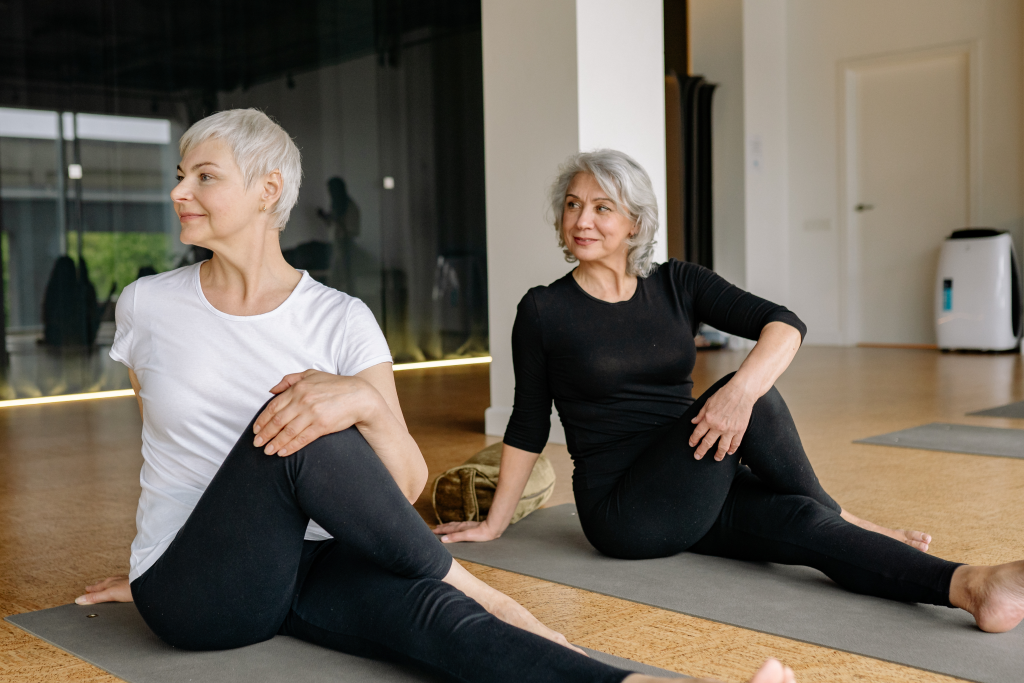
I’ve practiced alongside people in their twenties and people in their eighties.
I’ve practiced while healthy and while recovering from injuries.
The goal has never been to touch your toes.
The goal is to improve your quality of life.
It’s being able to move with less discomfort.
Sleep more deeply.
Feel steadier on your feet.
Have the energy to do the things you love.
That’s what healthy aging looks like.
Many of my readers begin with chair-assisted yoga and gradually build confidence, mobility, balance, and strength over time.
Start Small
If you’re new to yoga, don’t overcomplicate it.
Start with:
Five minutes of gentle stretching
Deep belly breathing
Simple seated movements
A short evening relaxation routine